
by Fazal Saadi
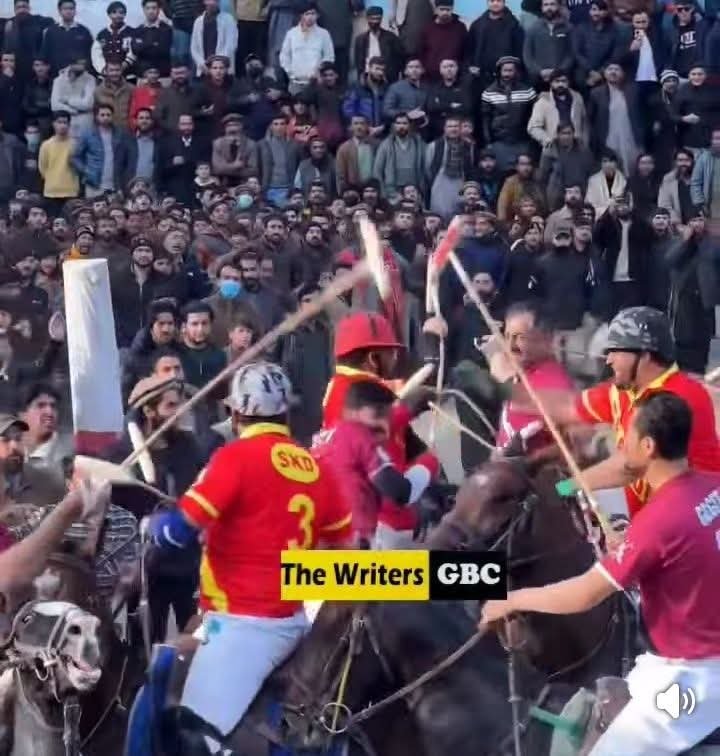
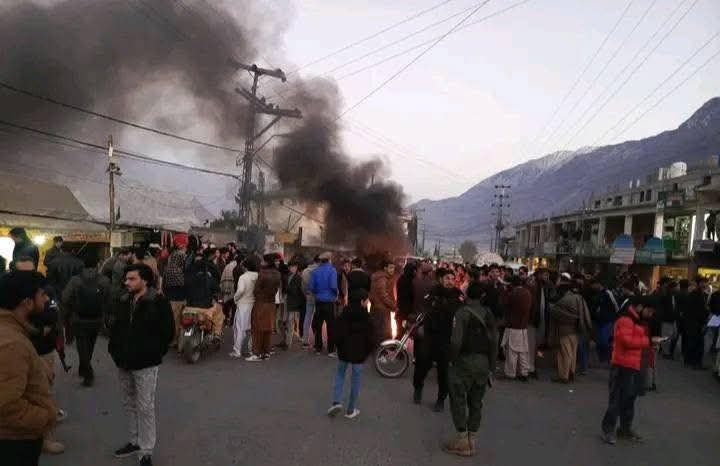
The recent clash between student groups at Karakoram International University (KIU) the other day shattered the calm of Gilgit-Baltistan. Within a week, the assault on the Skardu polo team by members of the Gilgit team further deepened public anxiety. These recurring episodes of violence, often sparked by trivial disagreements yet rapidly escalating into sectarian or ethnic confrontations, are not random outbursts. Violence now erupts on university campuses, sports and cultural festivals become arenas for moral policing, and even weddings dissolve into confrontation.
They are symptoms of social and political ills afflicting our society, pushing it to its limits, shaped by rising deprivation, alienation, distrust, unemployment, widening inequalities, and the absence of democratic representation becomes the defining emotion of an entire generation.
Some incidents may be spontaneous, but many are deliberately fomented and engineered by segments of the ruling elite and state apparatus to serve narrow political, strategic and divisive objectives.
This relentless volatility has perplexed residents within the region and those living outside. People are asking: What happened to us? When did ordinary social life begin to feel impossible? Why is our society slipping into such an unnerving state? And what does this alarming shift reveal about the direction we’re heading? To understand these “abnormal” behaviours, we must look beyond moral decline or generational disrespect in a historical perspective.
Before the 1970s, Gilgit-Baltistan was a socially cohesive society. People lived with harmony and dignity. Although materially poor due to its geographical remoteness and liminality, the region was tolerant. Communities drew strength from and relied on traditions of cooperation, collectivism, hospitality, and shared identity that softened the hardships of mountainous life. Festivals and rituals brought entire villages and valleys together; sectarian, linguistic, and tribal disputes were settled through dialogue, and rarely fractured public life.
Since the 1980s, Gilgit-Baltistan has been undergoing a tumultuous transformation. Global and regional upheavals have driven this change, the retrogressive policies of Zia’s despotic regime under the guise of Islamisation, and persistent economic uncertainty. This was compounded by a constitutional vacuum and remote-controlled governance that have systematically fractured the foundations of our society and local institutions. The resulting societal stress is manifest in shifting gender dynamics and the intense politicisation of identity.
Together, these pressures have created precisely the kind of conflicts that Marxist scholars, such as Engels, Gramsci, and Federici, identified as “structural contradictions” that erupt violently in the social body. Local voices like Aziz Ali Dad powerfully argue in his article “Psychopathology and Societal Malaise of Gilgit-Baltistan” published in this paper, a community left powerless, hiding its insecurities behind masks of rigid codes of honour, religion, masculinity, and superficial loyalty.
The fundamental contradiction is Gilgit-Baltistan’s unresolved constitutional status. For over seven decades, the region has remained politically suspended — neither fully integrated into Pakistan nor autonomous enough to shape its own future. With no representation in Pakistan’s Parliament and no clear citizenship rights, people live in a state of institutional invisibility.
This structural powerlessness shapes behaviour. Marxist scholars argue that when a population is denied political and economic agency, consciousness becomes distorted. People compensate for a lack of real power by embracing symbolic or superficial forms of control. Aziz Ali Dad captures this beautifully when he describes the local populace’s obsession with taking photos with bureaucrats, flattering officials for favours, and performing loyalty instead of demanding rights.
Layered onto this is the expanding role of the powerful Pakistani establishment. In GB, the Establishment is not just a security actor; it is a psychological presence shaping land decisions, colonial bureaucratic behaviour, development priorities, and public order.
Gramsci’s theory helps us to understand how hegemony functions. When ordinary citizens cannot influence state decisions, they resort to survival behaviours of obedience, flattery, silence, and an overperformance of patriotism. People who feel they cannot protest “upwards” often turn their frustrations “inwards,” toward one another, producing the aggression now visible in public life.
These structural forces feed directly into the gender anxieties now intensifying across GB. As women pursue education, enter public spaces, excel in sports, and claim rights, particularly inheritance rights, the old patriarchal order reacts defensively.
Federici reminds us that patriarchy is fundamentally about controlling women’s labour, bodies, and property. In a region where men already feel politically disempowered by constitutional ambiguity and economically insecure, women’s empowerment becomes a perceived threat. This explains the rise in moral policing at cultural and sports events, online harassment, hostility towards women’s visibility, and attempts to confine them to domestic roles.
Aziz Ali Dad explains this contradiction well. “Men who loudly preach honour in public harass women in private; those who romanticise the so-called ‘cultural values’ and claim moral superiority fear women’s participation in public life; men who declare themselves protectors become wolves toward others’ daughters.” This is not cultural conservatism. It is power struggling to preserve itself.
Sectarian identity has also grown into a defining feature of social behaviour. Even public spaces like hospitals, educational institutions, workplaces, social and political gatherings are increasingly shaped by sectarian boundaries. Each confrontation leads to renewed demands for gender and sectarian segregation.
Gramsci offers a powerful explanation: identity divides flourish in societies where real political participation is denied. When constitutional limbo blocks class-based or rights-based political mobilisation, people turn to narrower identities for loyalties. Sectarianism fills the vacuum created by disenfranchisement, fracturing society and preventing unified demands for representation.
What is unfolding in KIU is not merely “student rivalry.” It is a mirror held up to a region where economic stagnation, systemic neglect, and political disenfranchisement have created a perfect storm. When youth have no meaningful employment opportunities, no functional platforms for expression, and no democratic avenues to shape their future, they inevitably become vulnerable to manipulation. And in Gilgit-Baltistan, that manipulation has long been perfected by elements within the ruling elite and segments of the state apparatus, who routinely inflame sectarian tensions to divide people, and maintain control.
Universities are supposed to be sanctuaries of critical thinking and intellectual growth. They should produce citizens capable of questioning power, challenging injustice, and imagining a better future. Instead, KIU has increasingly been reduced to a proxy battlefield where sectarian narratives are sharpened, young minds are exploited, and political engineering is tested at the expense of students’ lives.
The burden falls on youth, the most educated yet anxious generation. Every year thousands graduate into unemployment and political ambiguity. In the past, young people were at least rooted in agricultural or pastoral life; today, even those anchors have slipped away. With no dependable institutions to channel their energy. They turn to social media, where anger and fake stories spreads faster than facts. The result is a youth bulge caught between modern aspirations and structural hopelessness. Small disagreements in markets or sports grounds swell disproportionately to release because psychological pressure.
Even culture once GB’s unifying strength has become contested. Festivals are policed, dances condemned, music politicised, and traditional games overshadowed by sectarian or hyper-masculine competition. As Gramsci warned, when the old cultural order collapses and a new one has not yet formed, “morbid symptoms” of fear, aggression, confusion, and fragmentation appear.
Gilgit-Baltistan’s crisis is not a sign of cultural decay; it is the collapse of an old order without the rise of a new one to take its place. Marx, Engels, Gramsci, and Federici all remind us that when people are denied material security, political agency, and social dignity, society does not break down because its people are inherently flawed. It fractures because its foundations have been weakened, both by those who wield power and by the many who, out of fear, support imbalance.
The region’s social behaviour is not irrational but abnormal; it is a logical response to structural disempowerment, gendered anxiety, economic backwardness, and institutional vacuum. But this trajectory is not irreversible. G-B’s society can be pulled back from the brink only by removing its constitutional ambiguity, strengthening civic and democratic institutions, enforcing equitable laws including women’s property rights, expanding economic opportunities, creating genuine platforms for youth expression, and reclaiming cultural spaces from sectarian control.
Until policymakers confront the structural inequalities and deliberate political manipulation fuelling this unrest, KIU and the entire region will continue to lurch from one manufactured crisis to the next. Those concerned about Gilgit-Baltistan’s future must now confront the root causes with honesty and courage.
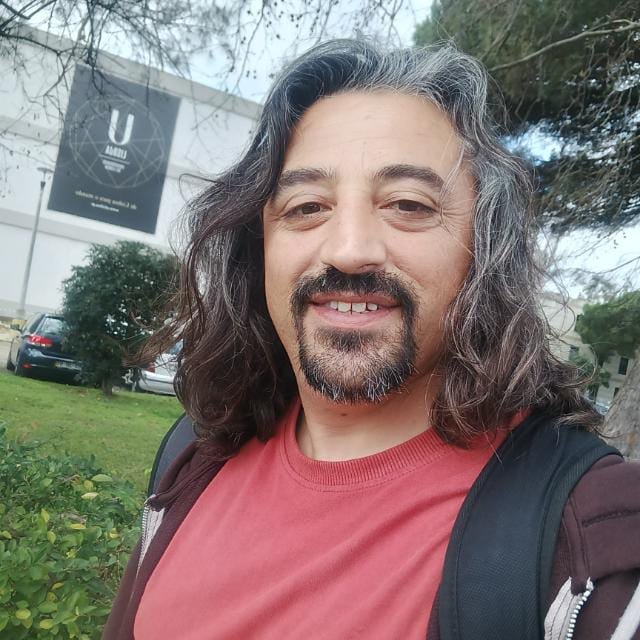
Fazal Saadi, hailing from Ishkoman, is a development practitioner and researcher interested in understanding development-induced challenges of poverty and inequality.

The High Asia Herald is a member of High Asia Media Group — a window to High Asia and Central Asia
One thought on “Fractures in Gilgit-Baltistan’s social fabric”
Nicely articulated the facts behind these incidents. Thanks Dr. Saadi