
News Desk
ISLAMABAD, Feb 26: The disaster management body of Pakistan has sounded an alarm bell over a heightened risk of Glacial Lake Outburst Floods (GLOFs) in next six months in the mountainous regions.
In an advisory, the National Emergency Operation Centre of the National Disaster Management Authority (NDMA) cautioned that rising temperatures, erratic weather patterns and the possibility of early heatwaves could trigger dangerous flooding across Gilgit-Baltistan and northern regions of Pakistan.
According to the Centre, projected temperature increases between March and June are expected to accelerate snow and glacier melt in Gilgit-Baltistan and upper parts of Khyber-Pakhtunkhwa. Rapid melting may increase pressure on fragile glacial lakes, raising the likelihood of sudden outbursts capable of unleashing destructive torrents downstream.
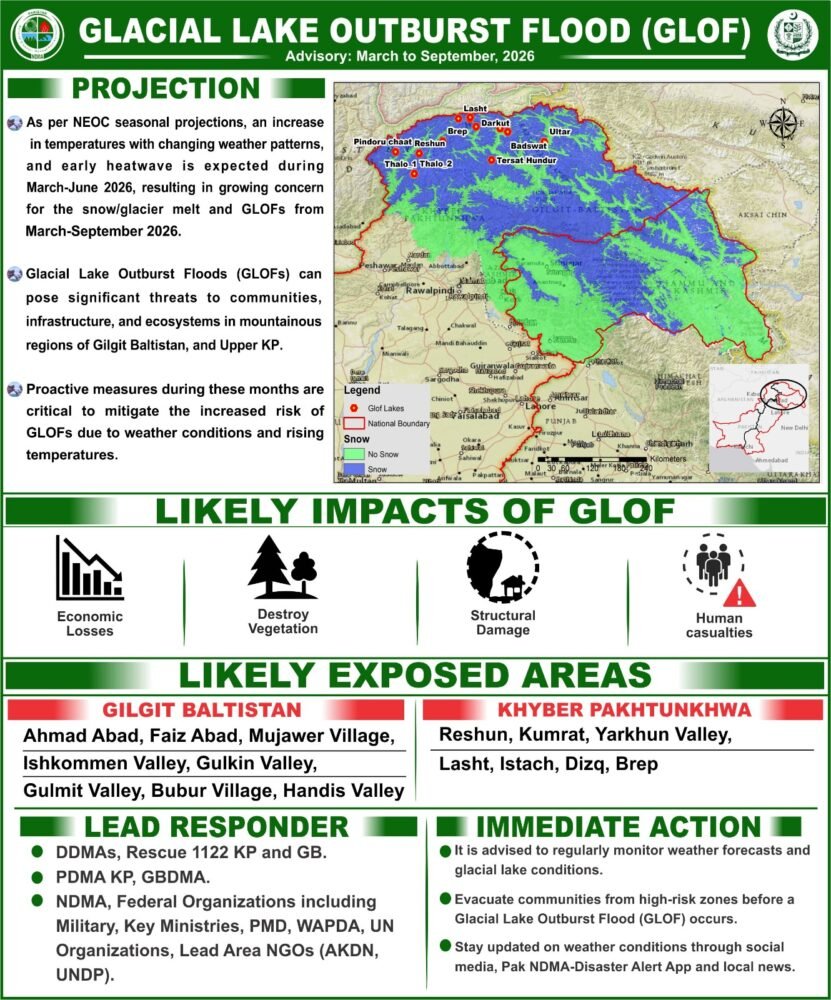
The centre has identified several vulnerable localities in Gilgit-Baltistan, including Ahmadabad, Ghulkin, and Gulmit in Hunza District; Bubur (Punial) and Handis Valley in Ishkoman. In Chitral Division’s Reshun, Yarkhun Lasht, Istach, Disq and Brep valleys; Kumrat (Kalam upper Dir), have been listed among areas at potential risk.
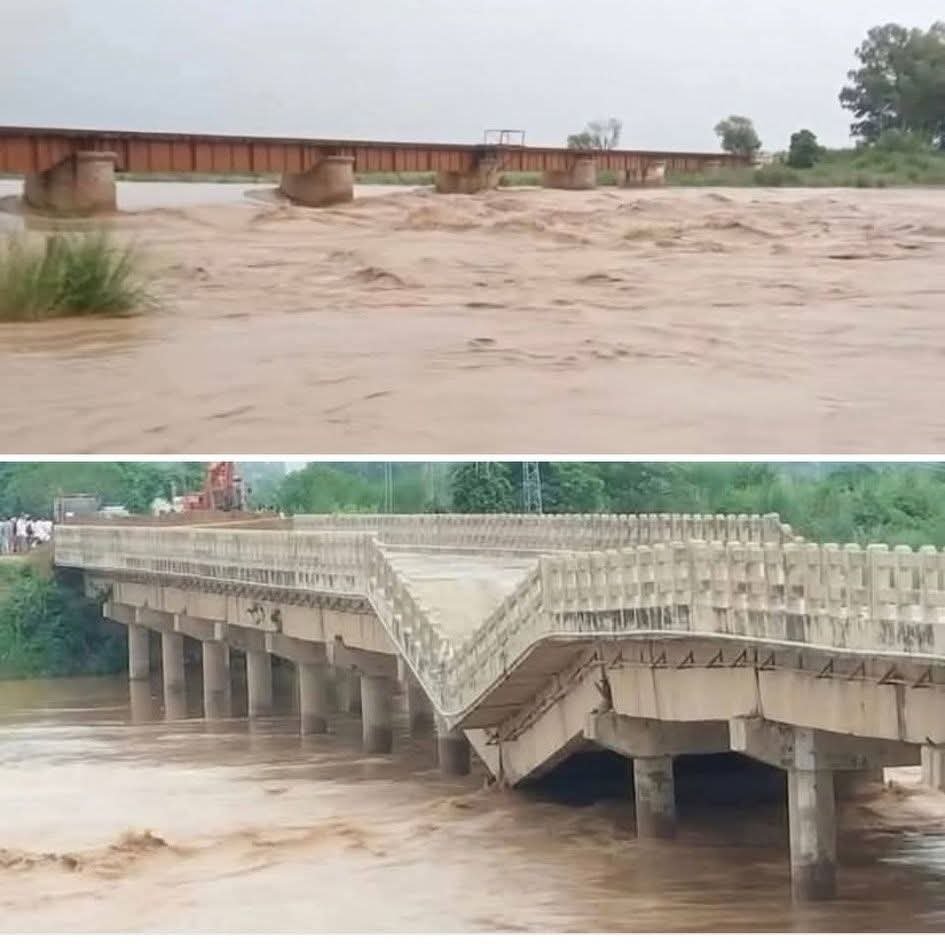
Officials cautioned that GLOF incidents can trigger powerful flash floods, sweeping away homes, roads, bridges, agricultural land and communication infrastructure within minutes. Vulnerable downstream populations face the dual threat of displacement and loss of livelihoods.
The warning comes amid lingering memories of last year’s glacier-related disasters in the north.
In parts of Ghizer and Gilgit districts, more than 300 houses, shops, religious places, bridges, water channels and infrastructures were damaged or destroyed when a glacial lake burst submerged large sections of settlements and farmland. Roads were washed away, isolating communities for days.
In Hunza, floodwaters linked to glacier melt damaged critical infrastructure, including sections of the Karakoram Highway in Gulmit, Shimshal, and upper Gojal, disrupting trade and mobility while threatening dozens of homes.
Though large-scale casualties were averted due to timely evacuations, the economic losses ran into millions, leaving families struggling to rebuild with limited state assistance.
Yet, despite the scale of destruction witnessed in 2025, there appears to be little visible urgency on the ground.
Crisis ‘not on political radar’
Observers in Gilgit-Baltistan say the looming GLOF threat is scarcely reflected in political discourse. The issue, they argue, is not even on the radar of many elected representatives, with no significant legislative debate, dedicated funding announcements or comprehensive mitigation strategy made public so far.
The capacity of the regional administration in Gilgit-Baltistan to respond effectively remains a pressing concern. Limited technical monitoring systems, weak early warning outreach and fragile local infrastructure continue to undermine resilience in high-risk valleys.
Civil society and community-based organisations, traditionally seen as frontline actors in disaster preparedness, have also come under criticism. Residents in vulnerable areas report a lack of evacuation drills, awareness campaigns or community-level preparedness initiatives ahead of the anticipated high-risk season.
“The seriousness one would expect after last year’s floods is simply not visible,” a local community leader told Dawn, requesting anonymity. “We are heading into another melt season without clear signs that lessons have been learned.”
Anticipatory action
In its advisory, NDMA has directed provincial and district authorities to review contingency plans, strengthen early warning systems and ensure evacuation arrangements are in place where necessary. Communities have been urged to remain vigilant, avoid unnecessary movement near glacial streams and strictly follow official instructions.
The authority has also encouraged the public to stay updated through official NDMA platforms and the “Pak NDMA Disaster Alert” mobile application for timely alerts.
However, disaster management experts stress that advisories alone will not suffice. With climate change accelerating glacial melt across the Hindu Kush-Himalaya and Karakoram regions, proactive planning, infrastructure reinforcement and sustained political attention are critical.
As temperatures rise and the melt season approaches, the question confronting northern Pakistan is stark: whether authorities and communities will act decisively — or whether another preventable tragedy will once again expose the cost of complacency.

The High Asia Herald is a member of High Asia Media Group — a window to High Asia and Central Asia