

As glaciers in the Hindu Kush, Himalayas and Karakorams crumble, incomplete data leaves millions in peril
by HAH Special Correspondent
Islamabad: The recent disaster that swept through the mountains and valleys of Gilgit-Baltistan is merely a tip of the iceberg. A far greater catastrophe is brewing atop the region’s ice-clad peaks and within its glaciers. The recent devastation from floods, cloudbursts, and glacial lake outbursts reveals a grim reality: climate change is relentlessly melting the region’s glaciers. This process is creating a rapidly expanding network of unstable glacial lakes that threaten to unleash devastating floods upon vulnerable communities below.
The disaster also exposed a critical gap in preparedness, leaving communities exposed to what experts term a “cascading disaster.” These events, often triggered by a Glacial Lake Outburst Flood (GLOF), involve the sudden, catastrophic release of water from a glacier-dammed lake. Such an event can wipe out entire villages, bridges, and highways in minutes.
While the Pakistani government and international agencies claim progress in monitoring these glacial hazards, a researcher issued a stark warning at a recent session: knowing the hazard is only half the battle. Not knowing who is in its path could prove disastrous.
We are charting the ticking bombs in the mountains but are turning a blind eye to the people living directly in the blast zone…we monitor the glaciers, but not the villages, schools, or roads downstream.”
nELAM pARI
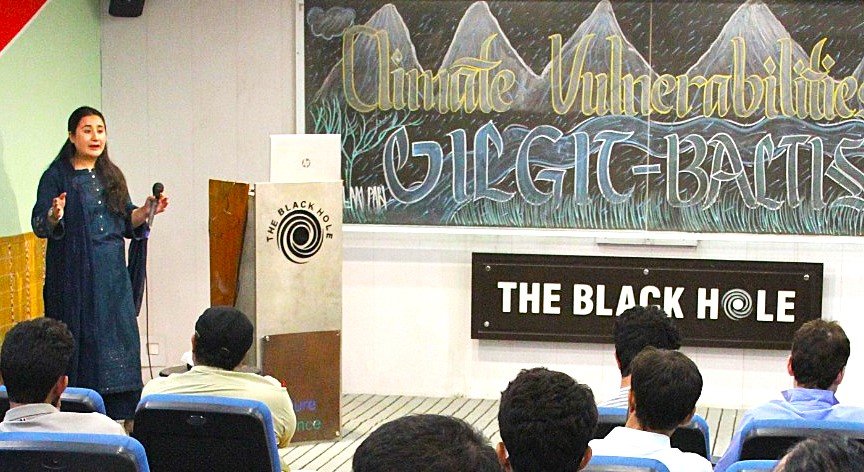
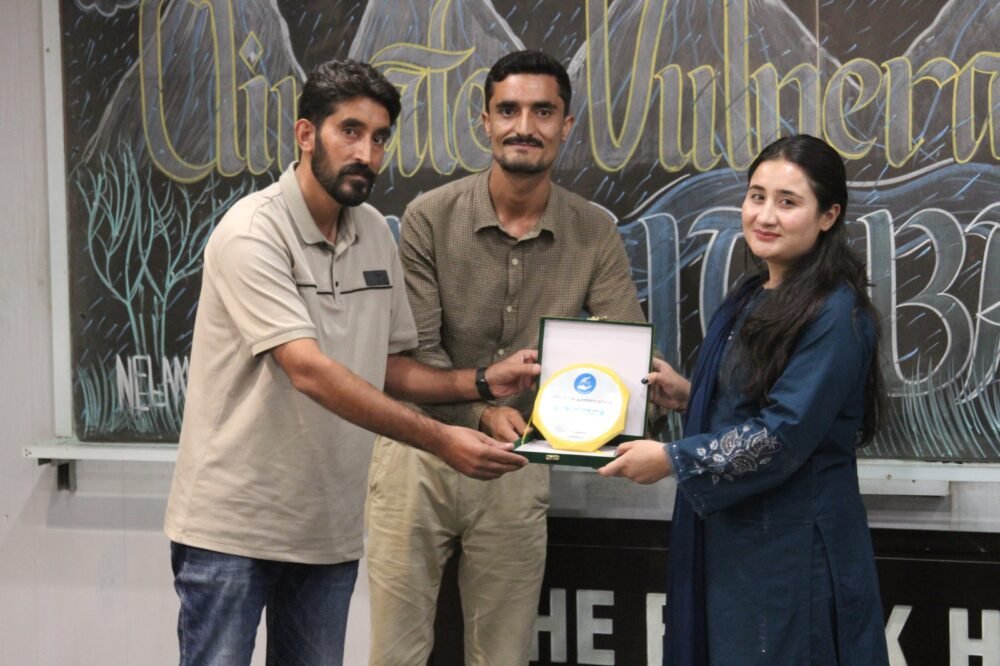
At a session titled “Climate Vulnerabilities in Gilgit-Baltistan: From Hazards to Resilience,” organised by the youth-led organisation Guren Osay in collaboration with The Black Hole Islamabad the other day, climate researcher Nelam Pari highlighted a gap in planning, the failure to integrate crucial data on human exposure and social vulnerability with the existing maps of physical threats.
“We are charting the ticking bombs in the mountains but are turning a blind eye to the people living directly in the blast zone,” Pari stated, adding “we monitor the glaciers, but not the villages, schools, or roads downstream. That’s where vulnerability lies.” She highlighted a dangerous blind spot in planning at national, regional and local levels.
“Our current models can predict where a flood might go, but they often fail to answer the critical questions: How many people live there? How many are children, elderly, or persons with disabilities? How quickly can they evacuate? Whose livelihoods will be washed away?”
Gilgit-Baltistan is home to over 7,000 glaciers, more than any other region on Earth outside the North and South poles.
Ms Pari explained that the Upper Indus Basin contains over 3,000 glacial lakes with 660 in the Gilgit sub-basin alone. Of these, 36 are officially classified as dangerous, and seven pose immediate threats to communities downstream.
As temperatures rise, these glaciers are retreating at an alarming rate, forming new lakes and expanding existing ones. Many of these water bodies are perilously dammed by unstable ice or loose rock moraines. A sudden collapse, triggered by an earthquake or even a simple heatwave, can release millions of cubic meters of water with the force of a tsunami, Ms Pari said.
As temperatures rise, these glaciers are retreating at an alarming rate, forming new lakes and expanding existing ones. Many of these water bodies are perilously dammed by unstable ice or loose rock moraines. A sudden collapse, triggered by an earthquake or even a simple heatwave, can release millions of cubic meters of water with the force of a tsunami, Ms Pari said.
The Ghizer catastrophe
Ms Pari pointed to the recent flood in the Tali Dass-Raushan, Asumber, and Dain villages of Ghizer District as a chilling case study. It was a textbook example of systemic failure. With no official early warning system in place, residents relied on indigenous alerts. It was too little, too late. The resulting deluge swept away homes, devastated fertile farmland, and crippled critical infrastructure, leaving a trail of destruction and trauma.
This tragedy, the expert argues, underscores flaws in the current framework. The government’s focus is on the source of the threat—the melting glaciers—while the targets downstream remain dangerously unaccounted for.
Ms Pari questioned the risk and hazard assessment models. “Existing models often fail to account for how population growth and shifting settlement patterns are continually putting more people in harm’s way.”
Alerts may be issued, but without knowing the precise demographics of a valley, authorities cannot ensure the message reaches everyone or that evacuation routes are feasible for all residents.
Relief funds and infrastructure projects might not be directed to the most critically vulnerable communities, those with high poverty rates, limited access to information, or social inequalities that amplify the risk, she warned.
The researcher revealed that the risks are unequal, emphasising that exposure mapping and susceptibility analysis are critical, especially in the narrow, densely populated valleys of G-B, where a single flood can impact thousands in minutes.
The discussion detailed how marginalised groups, including women, low-income families, elderly and physically-challenged people face disproportionate risks and immense barriers to recovery.
These communities often live on the most hazardous land, have fewer resources to evacuate or rebuild, and are frequently excluded from disaster planning conversations.
In a powerful closing, Pari called for an overhaul of disaster risk governance at national, regional and local levels. She advocated for a new model that moves beyond isolated hazard detection to a fully integrated system. This model must combine precise scientific data with intimate local knowledge to drive inclusive, evidence-based planning that protects every citizen.

The High Asia Herald is a member of High Asia Media Group — a window to High Asia and Central Asia