
Abdul Ghaffar Bugti
Western and Southern Asia have once again emerged as the newest battleground for imperialist powers. Iran, Afghanistan, India, and Pakistan now stand at the epicenter of resource wars and regime-change designs, reflecting a broader struggle over markets, minerals, and geopolitical dominance.
The recent US-Israel strikes of February 28–29, 2026 reportedly killed Iran’s Supreme Leader, Ali Khamenei, along with members of his family, and left more than 200 dead and 700 wounded across Tehran, Isfahan, and other strategic sites.
The attacks targeted oil infrastructure and defense systems, aiming to disrupt supply chains and trigger price volatility through dollar-based oil trades managed via Arab allies. At one level, this exposed serious internal security failures within Iran. At another, it revealed a deeper vulnerability shared by much of the Third World: dependence on Western technological systems — including platforms operated by major Silicon Valley corporations — that remain structurally aligned with imperial power centers.
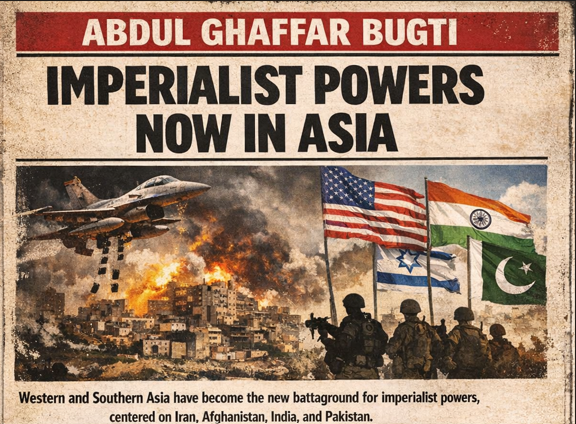
From a Marxist vantage point, these assaults are not isolated security operations but expressions of capitalism’s structural drive to monopolize Third World resources amid declining global hegemony. Iran holds approximately 12 percent of the world’s proven oil reserves — around 157 billion barrels — a crucial pillar of OPEC’s leverage. By halting exports and destabilizing production, imperial centers inflate global prices while simultaneously expanding arms sales. The objective stretches beyond temporary disruption: it gestures toward regime change, direct control over energy corridors, and broader extraction projects — including the estimated $6 trillion worth of copper, gold, lithium, and rare minerals spread across roughly 1,600 sites in Afghanistan and Balochistan. Severing China’s Belt and Road Initiative routes through the region further explains the strategic intensity.
Proxy forces hostile to Israel — from Hezbollah to other regional groups — are framed as security threats requiring neutralization. The United States alleges that these groups are directed and coordinated from within the region. Yet this so-called “security doctrine” operates within a broader imperial pivot, extending beyond immediate defense concerns to strategic control and geopolitical realignment. securing trade routes, mineral corridors, and geopolitical choke points.
Pakistan’s position within this axis is equally telling. Its February 21–27 airstrikes reportedly killed over 300 Afghan militants — individuals Islamabad claims were backed by India. These operations followed a September 2025 mutual defense pact with Saudi Arabia. Dependent on Arab financial flows and U.S. military aid, Islamabad has increasingly aligned itself with Gulf and Western strategic interests. In February 2026, it joined the US-led “Board of Peace for Gaza,” further distancing itself from Iran while deepening military ties with Gulf monarchies.
India, under Narendra Modi, also moved decisively. His February 25–26 visit to Israel signaled endorsement of the strikes, aligning New Delhi more openly with anti-Iran positions even as Gaza remained devastated. Meanwhile, Tehran has sought diplomatic backing from Russia and China at the United Nations, sharpening what increasingly resembles a capitalist–communist geopolitical fault line.
This pattern follows the well-documented playbook of imperialism: the ravaging of Iraq, Syria, Lebanon, Palestine, Afghanistan, Vietnam, Korea, Algeria,Venezuela, Libya, and Yemen — alongside numerous African states — in pursuit of markets, labor, and raw materials. Now the focus sharpens on Iran and the mineral wealth of Balochistan. Pakistan’s elite, sustained by foreign patronage, risk striking neighbors while eroding their own sovereignty, perpetuating a model of dependent capitalism rather than autonomous development.
The ultimate burden of these conflicts falls not on ruling elites but on workering Class people — the exploited classes across borders. Humanity must reject comprador enablers and forge internationalist solidarity capable of dismantling imperial structures. Nationalization of resources, cross-border working-class alliances, and the overthrow of dependency-driven regimes remain, from this perspective, the only path toward emancipation — in Balochistan and beyond.
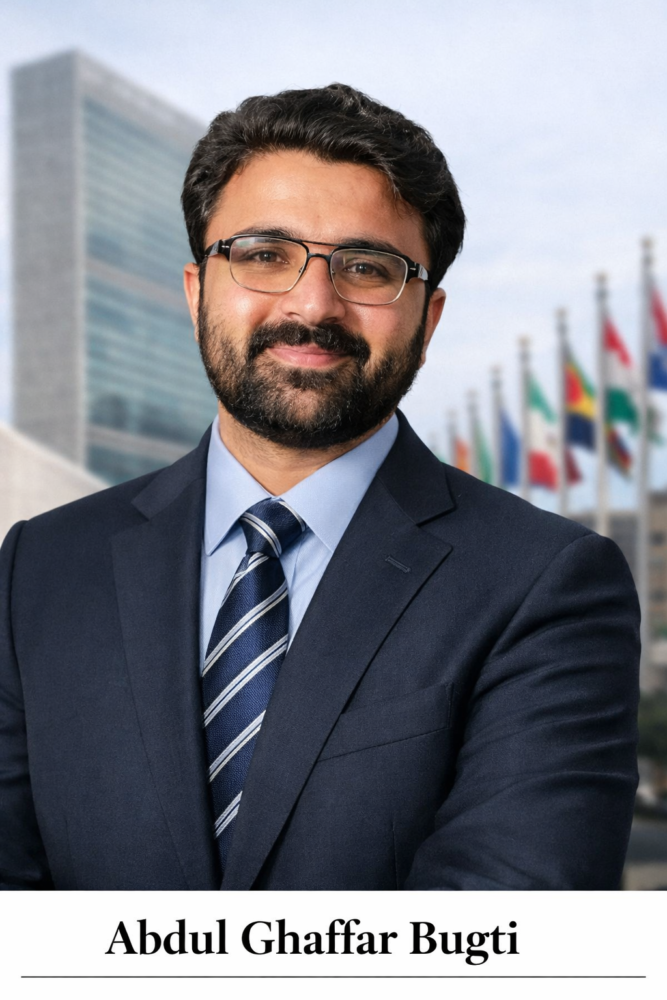
Abdul Ghaffar Bugti
Abdul Ghaffar Bugti is a journalist and Member of Amnesty International

The High Asia Herald is a member of High Asia Media Group — a window to High Asia and Central Asia