
Bureau Report
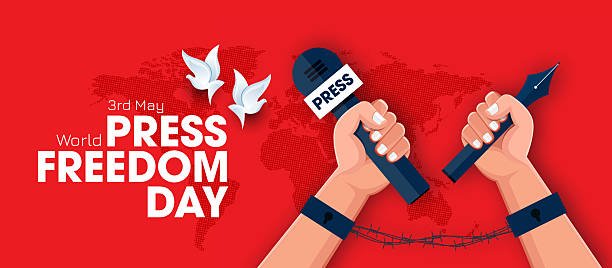
GILGIT / SKARDU: On World Press Freedom Day, official ceremonies and messages from the caretaker government officials reaffirmed their commitment to freedom of expression. But on the ground, journalists and press freedom advocates say the reality is starkly different calling for urgent action to reverse deepening press freedom crisis.
In a message, the Caretaker Information Minister Ghulam Abbas stated that a free, impartial, and responsible media serves as the backbone of any democratic society. He declared, “Without press freedom, the concept of democracy remains incomplete.”
He added that this day reminds us of the sacrifices made by journalists who laid down their lives for the truth and never compromised the sanctity of the pen.
The minister stressed that journalism is not merely a profession but a public trust. He said the caretaker government fully believed in freedom of expression and was committed to providing all possible support to the media and pledged an environment where journalists could work “without fear or pressure.”
Citing contemporary challenges, Abbas noted that while information technology has accelerated the reach of news, fake news and propaganda have put journalists under immense strain. He urged the media community to ensure accuracy, balance reporting, and “national interest” in news dissemination. Instead of sensationalism, he said, fact-based reporting could herald positive change in society.
Yet, in the same breath, the government’s own use of propaganda tools and media management tactics raises serious questions about who defines “national interest” and who gets silenced in the process.
The journalist-turned minister’s remarks come at a time when freedom of expression in Pakistan and Gilgit-Baltistan, in particular, faces increasing challenges, from state censorship, extrajudicial pressure on media houses, and the intimidation of critical voices under the guise of ‘national interest’.
Separately, at a ceremony at Gilgit Press Club, Information Secretary Rehman Shah said: “Today is, in essence, a day to reaffirm our commitment to promoting truth and justice, building a brighter future, and fostering sustainable development in society.”
He noted that journalists were playing a key role in bringing the truth to light. Praising the services of journalists in a sensitive and remote region like Gilgit-Baltistan, he said that despite limited resources, local journalists uphold journalistic values and convey the truth to the public.
Shah further stated that “journalists are the mirror of society” and that their constructive criticism plays a key role in social reform.
He claimed the Information Department will take serious steps to resolve the problems and obstacles faced by journalists. He promised progress on policies designed for endowment fund for journalists’ welfare, and a digital media policy.
Deputy Director of Information Farooq Ahmed Khan claimed the government was taking “practical steps” to resolve journalists’ problems. However, critics note that press clubs remain heavily dependent on government patronage, and genuinely independent media voices are systematically marginalised.
Yet such assurances ring hollow against the grim ground realities that journalists of Gilgit-Baltistan face daily.
As speaker after speaker at the Gilgit Press Club insisted, free, responsible, and dignified journalism is the only guarantee of a healthy society. But as one senior journalist present at the ceremony remarked privately, “We don’t need more shields or speeches. We need safety, justice, and the freedom to report without looking over our shoulder.”
Pakistan continues to rank perilously low on global press freedom indices. In Gilgit-Baltistan, local reporters covering public issues such as environmental degradation, irresponsible tourism, land grabs, electricity shortages, and sectarian violence frequently face harassment, detention, and physical attacks.
The region’s sensitivity is routinely exploited as a pretext to silence dissent under the guise of ‘national security’.
Across Pakistan, journalists face arrests, digital surveillance, and economic pressure through the denial of advertisements and non-payment of salaries.
Critical journalists are often branded as anti-state elements. Several of the very press club leaders who spoke at the Gilgit ceremony, including President Tahir Rana and union representatives, have themselves previously faced threats, FIRs, and violent attacks for exposing corruption or raising citizen complaints against powerful officials.
If official tributes are to mean anything, journalists and human rights defenders say the government must move beyond symbolism and take concrete action immediately for the improvement of working condition and conducive environment particularly for women journalists and access to information.
The government must repeal repressive laws such as PECA laws that curb free speech, ending extrajudicial surveillance and intimidation of media workers, prosecuting those who intimidate journalists, and ensuring that “national interest” is not used as a blanket excuse to silence legitimate criticism.
The ceremony in Gilgit ended with an exchange of shields and tributes to journalists’ sacrifices. Without urgent and meaningful reform, World Press Freedom Day in Pakistan, in general, and in Gilgit-Baltistan in particular, will remain a ritual of rhetoric rather than a catalyst for change.

The High Asia Herald is a member of High Asia Media Group — a window to High Asia and Central Asia