
Abdul Ghaffar Bugti
The melodies of Bugti folk singers have begun to travel far beyond the rugged landscapes of Dera Bugti, quietly crossing borders, dissolving cultural divides, and finding resonance in distant audiences. What was once confined to tribal gatherings and desert evenings is now emerging as a voice of connection — carrying themes of love, longing and harmony across regions.
For decades, however, the cultural expressions of Balochistan remained largely unheard. While the region was frequently discussed in terms of conflict and security, its artistic voices received little institutional support. In this silence, it was communities themselves — particularly the Bugti tribe — that carried forward their musical heritage, preserving and performing it against the odds.
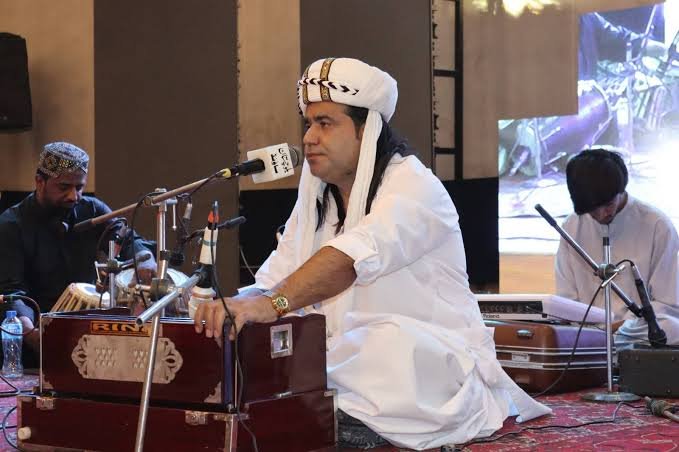
Today, that persistence is beginning to yield recognition.
Among the most prominent contemporary voices is Wahab Bugti, whose breakout performance of “Kana Yaari” on Coke Studio in 2022 introduced Balochi folk tonality to mainstream audiences. By blending indigenous instruments with modern arrangements, the song marked a turning point in the digital revival of regional music. His later performance at the Jashn-e-Azaadi Pakistan 2025 event in Dubai symbolised something deeper: a once-marginalised voice stepping onto a global stage.
Yet Wahab Bugti is part of a longer lineage.
An earlier figure, Sabz Ali Bugti, played a key role in carrying Balochi melodies across borders. His work, widely circulated in neighbouring regions, drew both admiration and debate — praised for its emotional depth while also sparking discussions on musical influence and similarity.
Beyond the spotlight, there are quieter custodians of tradition. Singers such as Nari Bojla, Asad Bugti, and Haider Bugti remain committed to preserving the tonal integrity of Balochi folk. Their work resists commercialisation, focusing instead on continuity — safeguarding oral traditions, desert ballads and Sufi-inflected poetry in an increasingly algorithm-driven music landscape.
Newer voices, too, are emerging. On Pakistan Idol 2025, brothers Aasim Bugti and Qasim Bugti impressed judges, including Rahat Fateh Ali Khan, with their rendition of Ae Naz Husn-e-Wala. Their performance demonstrated that regional music could enter the mainstream without losing its emotional cadence or identity.
Instrumental traditions remain equally vital. Khawand Bakhsh Bugti is widely recognised as a master of the “suroz”, a traditional bowed instrument central to Balochi music. Artists like him form the backbone of this cultural ecosystem, ensuring that sound itself — not just lyrics — is preserved.
In regions such as South Punjab and Sindh, performers like Jago Bugti and Babil Bugti have gained popularity, reflecting shared cultural geographies that predate modern administrative boundaries. Their music speaks to audiences across Dera Ghazi Khan, Rajanpur, Kashmore and Sukkur — reminding listeners that culture often travels more freely than politics.
The poet and Singer Aajiz Jan Bugti has written thousands of Balochi songs. Two of his dubbed songs, “Chittiyan Kalaiyan” and “Baby Dol Mein Sonay Di,” sparked a month-long debate between Indian and Pakistani media. Additionally, his poetry includes a large number of patriotic songs. He both writes and performs his poetry himself. Recently, he was also honored with a Best Poetry certificate .
Other artists represent diverse thematic strands. Arif Bugti leans toward revolutionary expression, addressing dignity and social change. Bustan Bugti explores Sufi poetics, invoking longing and devotion. Meanwhile, Sultan Bugti and Parvez Bugti experiment with contemporary arrangements, engaging younger audiences in Makran and Kharan.
Despite their growing recognition, many of these artists continue to perform primarily at weddings and local gatherings, often for minimal compensation. Their work sustains cultural memory, yet remains economically undervalued.
What binds them is not merely shared identity, but shared inheritance.
Balochistan’s cultural marginalisation has long shaped how the region is perceived. National discourse tends to foreground insurgency, missing persons, or resource extraction, while overlooking the artistic vocabulary of the same landscape.
This imbalance matters.
When a region is defined primarily through conflict, its softer registers — poetry, music, and emotional expression — are pushed to the margins. Yet Balochi folk traditions are rich with themes of separation
(hijr), honour, spiritual yearning and devotion. The desert, in these songs, is not just geography; it is metaphor — for endurance, memory and longing.
The Bugtis, often stereotyped through the lens of toughness, also carry deep lyrical tenderness. Their music is not only about resistance, but about love, exile, and belonging.
In this sense, music becomes a form of quiet resistance.
It resists erasure.
It resists simplification.
It resists being reduced to headlines.
When a Balochi folk song reaches an international stage, it does more than entertain — it repositions identity. It asserts that cultural production from places like Dera Bugti is not peripheral, but essential.
Perhaps the deeper truth is this: strength and softness coexist. A people known for endurance can also be known for elegance. A tribe associated with defiance can also carry profound devotion.
And in the end, it is this archive of emotion that endures the longest.
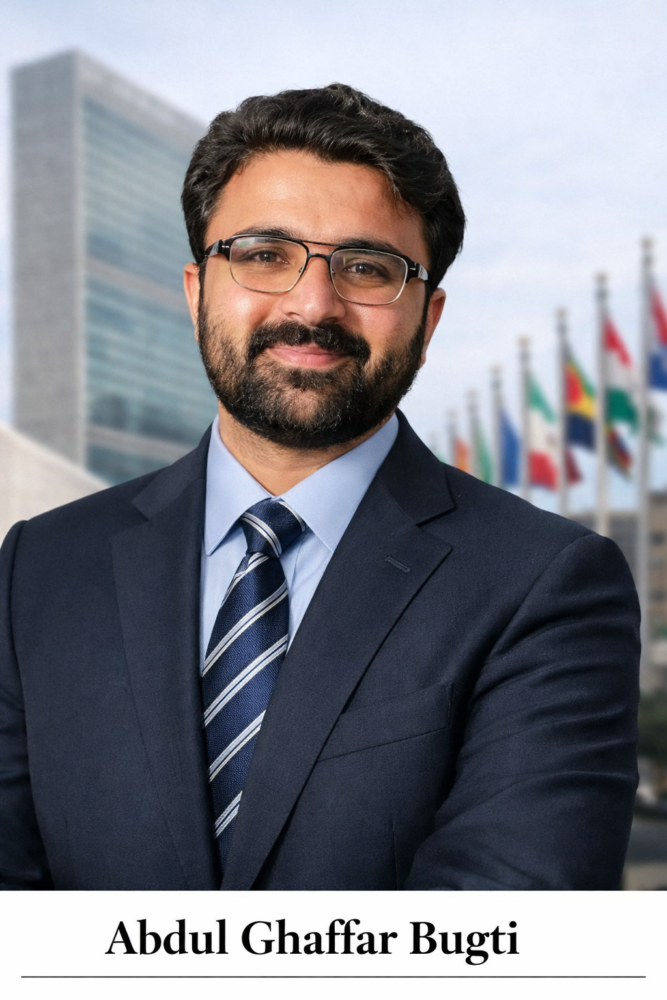
Abdul Ghaffar Bugti is a journalist, essayist, and human rights activist , United Nation Youth leader and Member of Amnesty International dedicated to amplifying marginalised voices with particular focus on Balochistan. Currently serving as Assistant Editor at The High Asia Herald and Baam-e-Jahan. His incisive essays—published in The Friday Times, The Express Tribune, Humsub Urdu, Nayadaur Urdu, and Sri Lanka Guardian—tackle pressing socio-political issues, from gender inequality and educational disparities to the systemic exploitation of resources in Balochistan and other oppressed communities.

The High Asia Herald is a member of High Asia Media Group — a window to High Asia and Central Asia