
by Roheena Ali
The appointment of Naureen Bano Lehri as the interim Chairperson of the National Commission on the Status of Women (NCSW) marks a significant step forward in Pakistan’s fraught journey toward gender equality and inclusive governance. This decision signals recognition of merit intertwined with the importance of representation from historically marginalised regions, particularly Balochistan.
As noted in the Commission’s official statement, Ms Lehri’s professional trajectory is deeply aligned with the NCSW’s core mandate. Her two decades of experience span critical areas: gender-based violence, women’s political participation, peacebuilding, and social inclusion, often in complex and conflict-affected environments. Her leadership in strategic planning, policy advocacy, and institutional strengthening, coupled with her academic grounding and specialised training, provides her with a rare blend of field-based expertise and strategic vision. This background is a testament to a career dedicated to navigating the very socio-cultural dynamics that continue to shape gender relations in Pakistan.
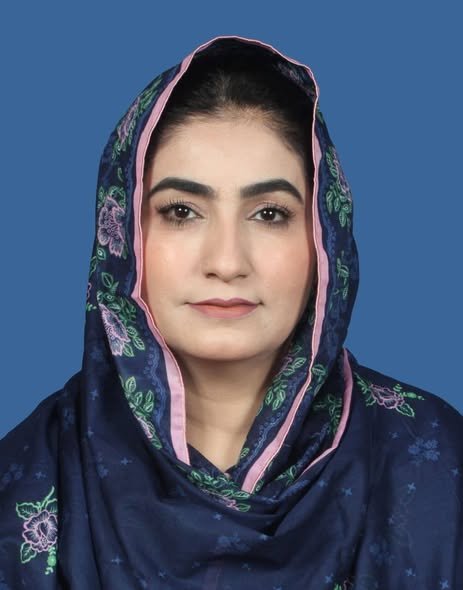
However, the symbolic weight of this appointment cannot be overstated. Ms Lehri hails from Balochistan, a province that has long been the epicentre of a deep-seated sense of deprivation and marginalisation. For decades, the resource-rich province has grappled with infrastructural neglect, economic underdevelopment, and socio-political alienation. For its women, these challenges are magnified, creating a landscape of compounded exclusion. In this context, her appointment to lead the NCSW signals that leadership spaces, however slowly, are beginning to accommodate voices from the very peripheries of national discourse.
While Ms Lehri’s appointment is a cause for optimism, it stands in stark contrast to the persistent data on gender inequality. The World Economic Forum’s Global Gender Gap Report 2024 continues to rank Pakistan near the bottom globally, especially in political empowerment. In Balochistan, this disparity is worse. Female literacy rates hover between 24 and 36 percent, far below the national average, while the number of women in labour force remains abysmally low at about 10 to 14 percent.
These figures represent a systemic socio-economic exclusion. When coupled with persistently high rates of gender-based violence, including intimate partner violence, early marriages, and honour-related crimes, the plight of women in the province reveals a crisis of rights and opportunities.
It is precisely this deep understanding of ground realities, shaped by her work in conflict-affected environments and her connection to the province, that Ms Lehri brings to the national stage. Her appointment represents more than an individual achievement; it is a testament to the potential of inclusive, merit-based systems to recognise talent across geographic and social divides. Yet, it also serves as a critical reminder that representation cannot begin and end with a single appointment.
For institutions like the NCSW to be truly effective, they must consistently reflect the diversity of the society they serve. Women from marginalised regions bring indispensable insights into crafting policy on education, healthcare, economic participation, and legal protection, areas where regional disparities are most acute. The real challenge lies in institutionalising this approach. Sustainable change requires creating deliberate pathways for women from underserved communities, strengthening their access to education and professional opportunities, and ensuring their consistent participation in decision-making processes at all levels.
Ms Lehri’s tenure as interim chairperson, therefore, stands as both a milestone and a mandate. It is a milestone because it demonstrates that progress is possible when merit and representation converge. It is a mandate because it underscores that such moments must become the norm, not the exception. For countless young women across Pakistan, especially those in remote valleys of Balochistan who face systemic barriers, this appointment offers a powerful narrative of possibility. It tells them that their voices matter, that their geography does not define their destiny, and that leadership is within reach.
The ultimate success of this appointment will not be measured by the duration of Ms Lehri’s tenure, but by whether it paves the way for a future where inclusion is not an occasional gesture, but a foundational principle of Pakistani governance. Only then can the nation begin to bridge the chasm between the promise of representation and the persistent reality of marginalisation.
Roheena Ali Shah is a gender expert and scholar from Gilgit-Baltistan. She contributes essays on social issues to the High Asia Herald, regularly.

The High Asia Herald is a member of High Asia Media Group — a window to High Asia and Central Asia