
by F.Ali & Ghulamuddin
With electioneering concluding tonight after reaching its climax, Gilgit-Baltistan stands at a crossroads. The assembly elections are shaping up to be the region’s most consequential to date due to profound shifts in its electoral fabric since the 2020 polls. The most telling metric is the addition of 188,715 new voters, swelling the total electorate to 963,034 registered citizens (506,097 men and 456,937 women). This sharp expansion reflects an intensified political consciousness and suggests that mobilising first-time and previously disengaged voters could prove decisive.
As polling day approaches, the political temperature across Gilgit-Baltistan has risen in direct proportion to the crowded field. A remarkable 403 candidates are in the fray, but the composition reveals deeper currents. Only 131 represent established political parties, while 272 run as independents. This overwhelming preference for non-party candidacy points to fragmented party loyalties, weak institutional trust, and localised power dynamics that transcend traditional party labels.
Furthermore, the presence of eight women candidates represents a symbolic breach of entrenched conservative norms. Their inclusion reframes the election not just as a contest for power, but as an incremental test of gender inclusion in a region where women’s political participation has historically been marginalised.
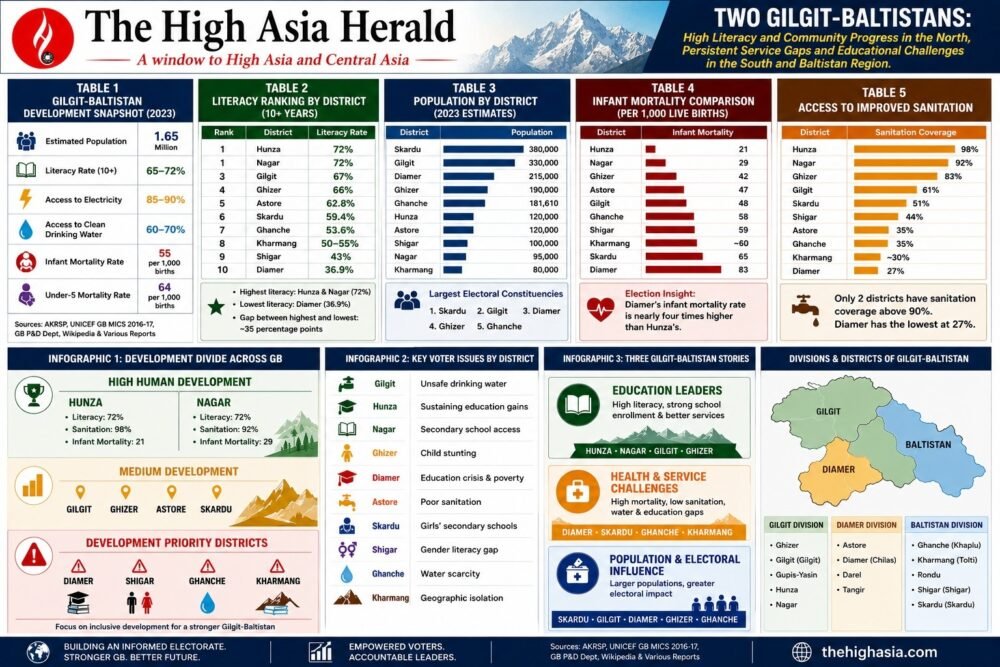
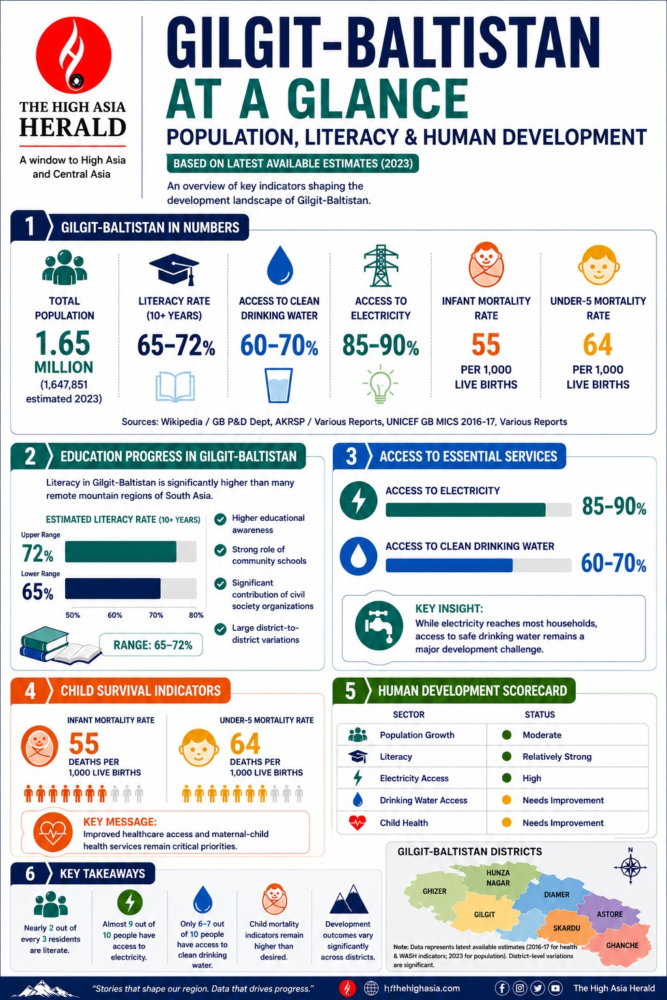
Ultimately, the Gilgit-Baltistan Assembly polls will be judged by how the incoming elected representatives confront a mounting crisis of legitimacy and delivery. The region’s voters are animated by a rising sense of deprivation rooted in constitutional limbo, compounded by economic and energy crises, widespread land and mineral dispossession, chronic unemployment, and a stark lack of health and education facilities. These are not abstract grievances but daily realities that shape voter calculus.
The last day of campaigning witnessed kilometre-long rallies of cars, Pajeros, vans and motorbikes staged by some political bigwigs and their parties. Against the backdrop of the current energy crisis such displays were not merely ostentatious. They were a grotesque waste of fuel, a slap in the face of ordinary people struggling to afford transportation for work, medicine, or daily survival.
Earlier in the campaign, the top leadership of the PML-N, including former prime minister Nawaz Sharif, Prime Minister Shehbaz Sharif, and others, descended on the region with heavy protocol and towering promises, repeatedly invoking their past “services.” Federal Minister for Kashmir and Gilgit-Baltistan Affairs, Amir Muqam, camped in the region for an entire month. Opponents saw this as blatant manipulation of voter choice.
Shehbaz Sharif distributed laptops to students at Karakoram International University in Gilgit and Hunza, a performative gesture that does little to address the impoverished region’s grievances. Meanwhile, PPP Co-Chairman Bilawal Bhutto-Zardari, accompanied by his sister MNA Asifa Bhutto-Zardari and other leaders, toured the area, addressing public rallies with high-energy but substance-light speeches. He also recalled the ‘services’ of his grand-father ZAB to the region.
In stark contrast to these national behemoths, constituency supporters and young activists ran a lean, self-funded campaign for the left-wing Awami Workers Party (AWPGB) candidates, Asif Saeed Sakhi, Aslam Inquilabi, Nazim Hussain Barq, as well as Balawaristan National Front (BNF) supremo Nawaz Khan Naji, and another progressive nationalist independent candidate Asif Naji. Yet some independent candidates in Hunza, Ghizer, and Baltistan were themselves accused of distributing cash to buy voter loyalty—mirroring the patronage politics of the very national parties they opposed.
Revolutionary songs for AWPGB and BNF leaders galvanized the campaign. The key difference between the rallies of national political figures and those of local progressive and nationalist leaders was the voluntary participation of young people, children, and young women in the AWPGB and BNF rallies, whereas the rallies of the Pakistani mainstream parties appeared staged, featuring a majority of senior citizens among the participants.
The most significant and hopeful aspect of the campaign was the addition of over 188,000 young voters, who visibly threw their support behind left-wing and nationalist candidates. This youth surge signals a generational rejection of seasonal, dynastic politics, wasteful spectacles, and empty promises. But the critical question remains: will this energy translate into lasting political change, or will it be crushed by the fuel-guzzling machinery of the bigwigs?
Against this backdrop, the election will be defined by three analytical tensions: first, the gap between a surging, newly aware young electorate demanding tangible relief and a fragmented candidate field offering mostly personality over policy; second, the organisational weakness of political parties against a tide of independents, raising questions about accountable governance; and third, the fragile but real advance of women’s political representation against traditional barriers, which could influence how gender-sensitive issues like healthcare access and maternal mortality are addressed. How these forces—and the seething deprivation beneath them—interact at the ballot box will determine not only the next government, but whether the region’s democratic deepening can translate into material improvements for its citizens.

The High Asia Herald is a member of High Asia Media Group — a window to High Asia and Central Asia