
by Safiullah Baig
Manuscripts (Sutras) are among the most sacred and authentic texts of Buddhist doctrine and civilization, preserved in Sanskrit, Pali, Chinese, and Tibetan languages. Within this corpus, the birch-bark manuscripts (Sutras) discovered near Gilgit city, is considered the most important. Collectively known as the Gilgit Manuscripts (Sutras), they are not only among the oldest surviving written documents on Buddhism in the Indian subcontinent but were also inscribed on UNESCO’s Memory of the World Register in 2017, a testament to their global significance.
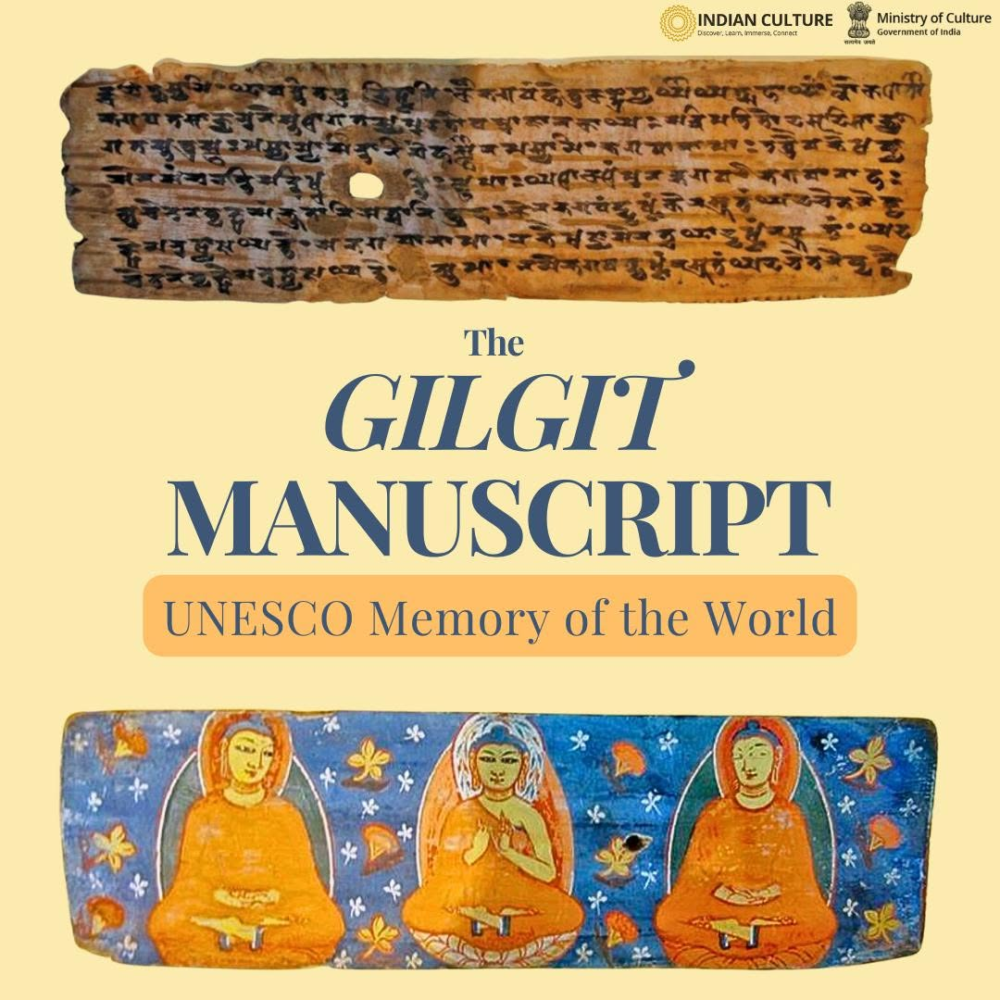
In 1931, shepherds discovered a vast trove of Buddhist texts inside an ancient stupa at Naupur, a settlement about 10 kilomtres west of Gilgit city. Written on birch bark and palm leaves in the Gupta Brahmi script, these manuscripts are composed in Sanskrit and Buddhist Hybrid Sanskrit, primarily representing the Mūlasarvāstivāda school of Buddhism. Carbon dating and palaeographic analysis place their production between the 5th and 6th centuries CE, making them among the earliest manuscripts in South Asia. At the time, the region was governed by the Patola Shahi dynasty and flourished as a vital centre of Buddhist learning.
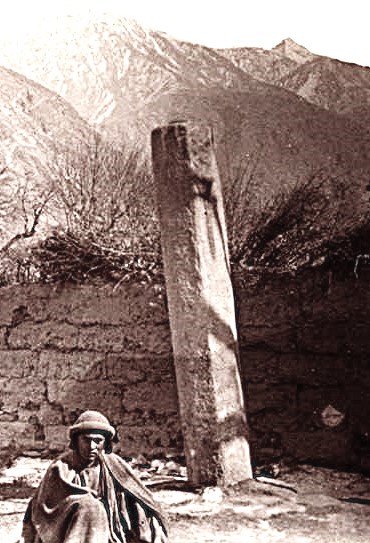
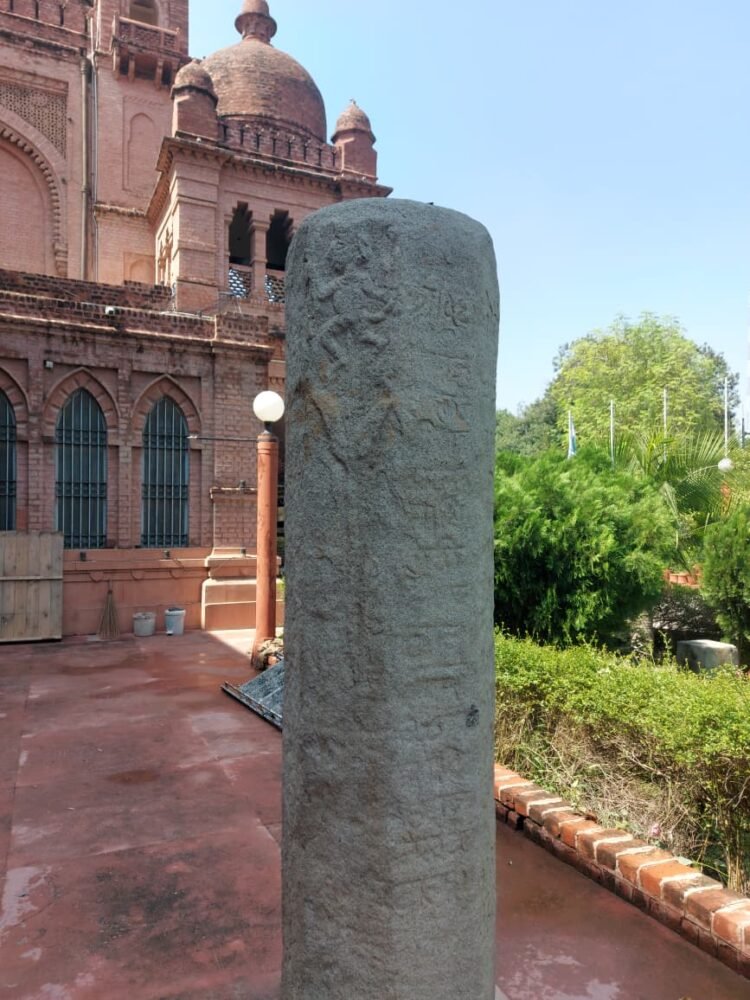
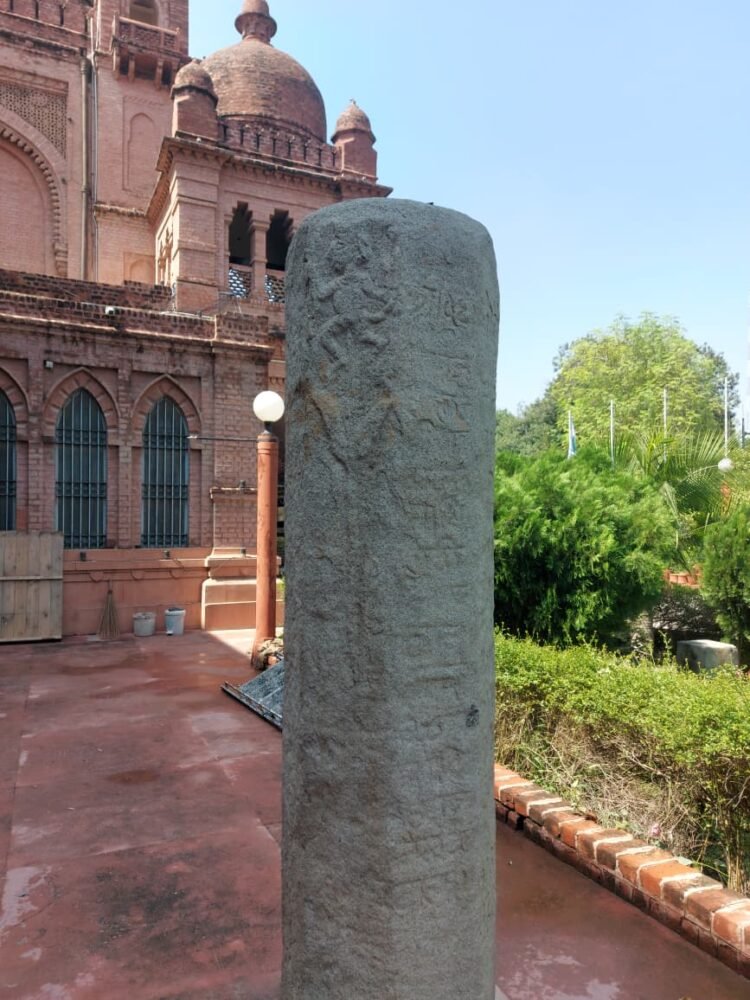
Gilgit Sutra,” a 2nd- or 3rd-century edict of Emperor Ashoka carved onto a seven-foot-tall heptagonal granite column. The inscription was first photographed by Colonel Lockhart, during his Gilgit Mission in 1885. Today, it lies exposed in the open at the Lahore Museum.
Sir Aurel Stein, a noted Hungarian-born British colonial archaeologist acquired a number of significant leaves and transported them to London. They are now residing at the British Library. A second portion was transported to Srinagar during the Dogra rule of which 1,800 folios are at Indian National Archives and the remaining are at Partab Singh Library Srinagar.
In 1950s another set of Gilgit Sutra was found from the same place in Gilgit which Capt Agha Muhammad Amin, Signal Commandant, sold to renowned Italian archaeologist Professor Giuseppe Tucci who resold to the Government of Pakistan after couple of years and thus reached the National Museum Karachi.
Other Buddhist Heritage at Risk
Gilgit-Baltistan has not lost its “Gilgit Sutra,” a 2nd- or 3rd-century edict of Emperor Ashoka carved onto a seven-foot-tall heptagonal granite column. The inscription was first photographed by Colonel Lockhart, a British Colonial officer, during his Gilgit Mission in 1885. Today, it lies exposed in the open at the Lahore Museum, where it has remained for many decades.
According to Professor Charles de Simone of Ghent University, Belgium, the Japanese Buddhist scholar Professor Kazunobu Matsuda identified a further cache of 450 birch-bark folios in 1998 at Sam Fogg, a London dealer in rare books and manuscripts. These fragments originate from the Gilgit–Bajaur corridor and belong to the same scriptural tradition. Radiocarbon dating places them between 676 and 776 CE, spanning the final decades of Patola Shahi rule and the early Islamic period. Today, these folios are under study at the University of Tokyo and other research centres.
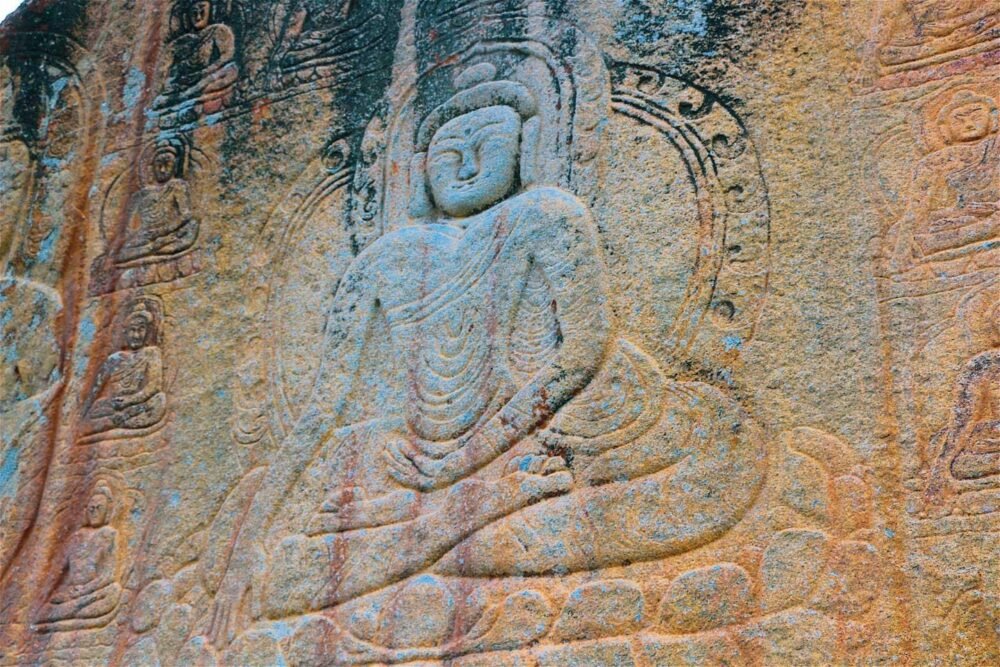
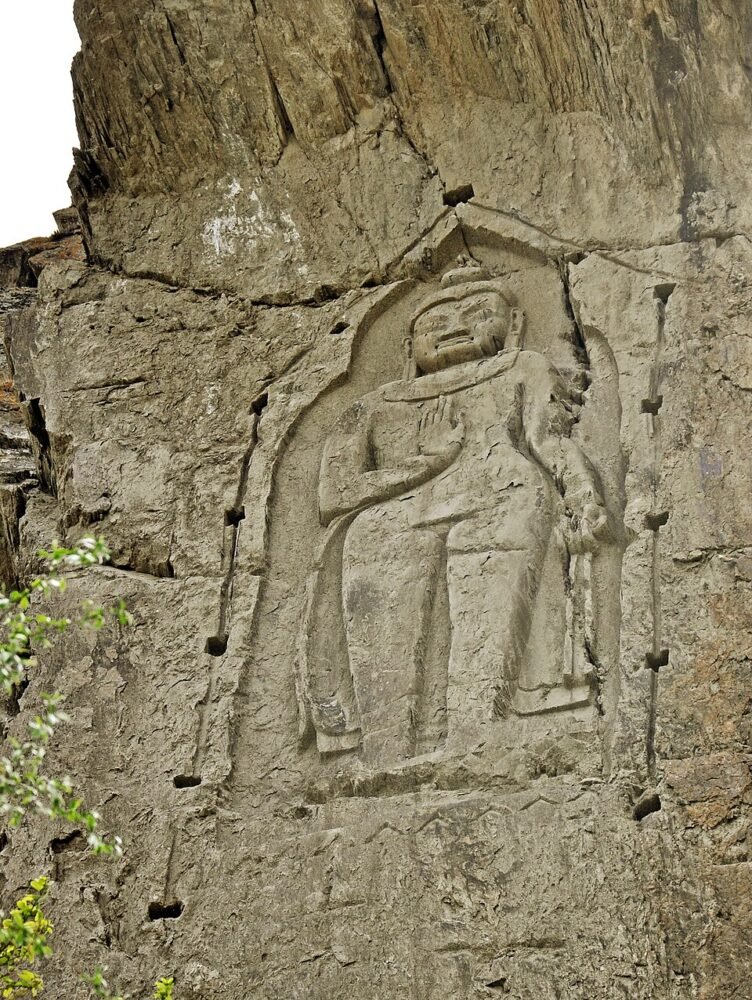
(L) One of the Manthal Buddha (3rd–4th century CE) rock reliefs in Baltistan’s Skardu District. (R) Kargah Buddha (a 7th-century cliff carving) near Gilgit.
It is a tragic irony that not a single leaf of this extraordinary treasure, comprising roughly three thousand folios, remains in Gilgit-Baltistan today. Local universities, scholars, and students have no direct access to this foundational heritage, severely limiting the region’s ability to study and teach its own authentic history.
The absence of the manuscripts is only one facet of a wider crisis. The 3rd Century BCE rock edicts of Emperor Ashoka at Mansehra and Shahbazgarh (Khyber-Pakhtunkhwa), inscribed in the Kharoshthi script, are weathering away due to exposure and neglect.
The construction of Diamer-Bhasha is also a major threat to the rock carving heritage. The dam will permanently submerge over 50,000 prehistoric and historic petroglyphs lining the Indus River around Chilas and Diamer. These carvings constitute an irreplaceable record of environmental, cultural, and religious history spanning from the Neolithic era through the Buddhist period.
The Kargah Buddha (a 7th-century cliff carving), the Manthal Buddha (3rd–4th century CE), rock reliefs and archaeological sites in Baltistan’s Skardu, Shigar, and Kharmang districts, and Hunza’s Haldeikish (Ganish), and the valleys of Yasin and Ishkoman in Ghizer District all tangible witnesses to the region’s pre-Islamic past remain unprotected and under-researched.
Political leaders, youth, and intellectuals of Gilgit-Baltistan must urgently take notice of this precarious situation. A clear strategy is needed including digital repatriation of scattered manuscripts. At minimum, high-quality digital copies of the dispersed manuscripts should be made available to local universities and research institutes.
The establishment of a dedicated museum and research centre in Gilgit and Baltistan is foremost step which could house reproductions and original materials, while leading conservation, translation, and exhibition efforts.
A 3-D documentation of the imperiled hieroglyphs must be carried out, accompanied by public education campaigns to create awareness among the people and students about these heritages.
A syllabus should be created so that future generations remain connected to the deep roots of their land and heritage.
The heritage of Gilgit-Baltistan is not merely a collection of antiquities; it is a key to understanding thousands of years of geographical, environmental, and human history. Its preservation is now a matter of the utmost urgency.

Safiullah Baig is a political and environmental activist with a vast experience in cultural heritage preservation.

The High Asia Herald is a member of High Asia Media Group — a window to High Asia and Central Asia
One thought on “The Silent Extinction of Gilgit-Baltistan’s Buddhist Legacy”
I applaud your call to digitally repatriate and preserve this heritage in the Gilgit Baltistan area. I am from Sri Lanka, and there are many buddhist researchers and scholars who would very much appreciate such efforts, and support your calls for this preservation.