
In a rapidly changing, technology-driven, and competitive world, quality education has become more necessary than ever—and it begins with quality teachers. In a region as diverse and geographically challenging as Gilgit-Baltistan, the professional growth of teachers is therefore imperative. Let us examine how public institutions are realising this crucial fact and fulfilling their responsibilities.
In Gilgit-Baltistan, the School Education Department (SED) is charged with a daunting task. It oversees roughly 1,800 schools, from primary to higher secondary level, and employs approximately 8,000 teachers.
To help teachers respond to changing curricula, diverse learning styles, and complex sociocultural backgrounds, the SED must provide robust, ongoing academic support, not one-off training sessions. True instructional growth requires continuous, in-class support.
When school systems invest in ongoing mentorship, regular instructional coaching, and collaborative peer networks, teachers can safely test new strategies and refine their craft in real time.
At present, professional development for in-service teachers depends heavily on two centers: The Teacher and Staff Development Center (TSDC) functioning under the SED in Gilgit city, which provides training to government teachers. The Professional Development Centre North (PDCN), established in the early 2000 under Aga Khan University’s Institute for Educational Development, (AKU-IED) has contributed significantly to the capacity building of teachers and administrators in schools run under the Aga Khan Education Service (AKES) and government of Gilgit-Baltistan.
However, a centralised approach without a proper mechanism for classroom observation and constructive feedback is unlikely to achieve the desired outcomes. AKES schools arguably benefit from an ongoing follow-up system of monitoring, classroom observation, and feedback at the cluster and classroom levels, though the main emphasis of assessing a teacher’s performance is on fee collection rather than academic excellence.
Unlike AKES schools, however, most government schools lack this kind of systematic academic support for teachers at school and classroom levels. Instead, SED heavily relies on centralised teacher training, which is unsustainable, costly, and resource-intensive. It also disrupts classroom teaching when teachers attend workshops during school days.
Also read: If wishes were justice: breaking the grip of greed and exploitation
Research indicates that episodic, centralised teacher training, detached from classroom life is not insufficient to foster lasting pedagogical growth. In contrast, a decentralised, cluster-based training model has been shown to directly improve classroom practice and student achievement (Rampa & Mphahlele, 2014). Moreover, it offers a more cost-effective and practical means of continuously upgrading teaching skills in contexts where centralized models fall short (World Bank, 2022; Nafisa, 2025). This model achieves this by turning each high school and its cluster of feeder schools into a professional learning community.
Additionally, the decentralised model resolves long-standing challenges of distance, cost, and continuity by bringing training directly to teachers in their own context, month after month. It can also help address gaps in curriculum implementation within government schools.
To maximise the impact of ongoing professional development, SED should leverage its most valuable existing resource: the pool of master trainers certified by PDCN. This can be achieved by institutionalising the following steps.
First, assign certified master trainers to each cluster high school to conduct regular classroom observations and provide on-site academic support to teachers from primary to higher secondary levels.
Second, organise subject teachers in each high school under a designated subject coordinator, creating structured opportunities for collaborative planning, peer teaching, and critical reflection. This consistent cycle of classroom observation, constructive feedback, and monthly workshops will establish a sustainable system of continuous professional development that ultimately improves classroom practices and student learning outcomes.
However, this does not mean abandoning centralised training. Workshops at national, provincial, and district levels remain vital for aligning teachers and education managers with updated policies, national goals, and global best practices. For training to matter, it must be followed by robust, school-level support that ensures new learning is applied is actually applied in the classroom.
Gilgit-Baltistan’s geography will always present challenges, but it should not limit the quality of teaching. A hybrid model, therefore, offers the best path forward: retain centralised training for policy alignment, while building a strong, decentralised, cluster-based system for daily support.
By supporting teachers consistently and directly in their classrooms, SED can transform its cluster high schools into learning hubs that would give every teacher a platform to strengthen pedagogical content knowledge and, in turn, improve learning for every child.
Finally, decentralised teacher training works only when backed by strong monitoring and sufficient material, financial and technological support. With those foundations in place, SED can turn geography from a barrier into catalyst for innovation ensuring that every teacher has the support to grow and every child has the opportunity to learn.
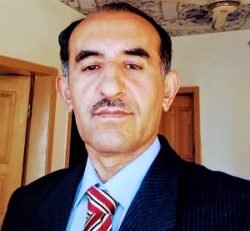
Karim Muhammad Khan is Principal of Boys High School Nomal. He is a teacher trainer and contributes regularly to High Asia Herald on educational and pedagogical issues in Gilgit-Baltistan schools

The High Asia Herald is a member of High Asia Media Group — a window to High Asia and Central Asia